
In the late 1940s, as the country recovered from World War II, California was the place to be for movie stars, business tycoons, military veterans and ordinary folks who moved West with their new-found wealth. As the population exploded and the economy boomed, roads and freeways connected towns and farmland. Suburban housing tracts dotted the landscape. High rises sprouted in city centers. And the post-war military industrial complex expanded throughout the state and thrived for decades.
But along with new opportunities came many of the old problems, including the inability of government agencies to manage waste and protect groundwater.
"In the 1920s and 30s, the attitude was 'oh, don't worry about contaminating groundwater' because the layers of soil already protect what was down there," said current State Water Board Chair E. Joaquin Esquivel. "Clearly, that was not true."
"Then in 1949, Assemblymember Randal Dickey introduced a report acknowledging that industrial discharges lead to groundwater pollution and lasting degradation of the land, and that existing laws were largely ineffective," continued Chair Esquivel. "While the (resulting) Dickey Act was far more of an industry protectionist law than a successful effort at regulation, it set up the framework for the state and regional water boards, and no other state had done that."
The Dickey Act created the State Water Pollution Control Board, a predecessor to the State Water Board, that was comprised of gubernatorial appointees and state officials who set statewide policy and coordinated pollution control efforts.
Local oversight established to address regional issues
The legislators also recognized that an area as large and geographically diverse as California would benefit from local approaches to water quality issues that reflected each area's specific characteristics relating to precipitation patterns, topography, population, along with the differing needs regarding municipal water supply and agricultural, industrial and recreational demands.
This decentralized approach led to the establishment of regional water quality control boards in each of the state's nine major watersheds, empowering the governor-appointed board members to establish and enforce water quality standards, issue waste discharge permits, monitor water quality and take enforcement action when needed.
"Having regional regulations and regional boundaries ensures you have local knowledge, wisdom and understanding for specific issues in specific places," continued Esquivel, "and the structure of the State Water Board helps manage statewide issues and hears disputes regarding water rights. That's why the Porter-Cologne Act was so important. It created a permit system that is key to preventing damage from pollution rather than acting after the fact."
California emerges as a leader in preventing water pollution
Passed by the Legislature in 1969, Porter-Cologne, which significantly expanded the power and enforcement authority of the Water Boards, became recognized as one of the nation's strongest pieces of anti-pollution legislation, so innovative and highly regarded that it influenced elements of the 1972 federal Clean Water Act.

"The Porter-Cologne Act… created a permit system that is key to preventing damage from pollution rather than after the fact."
— E. Joaquin Esquivel, State Water Board Chair
"We still have sewage spills," noted Esquivel. "Contamination happens. But the Dickey Act reminds us that these conversations have been going on for most of the past century. What is the future of communities? How do we prevent them from suffering pollution impacts in the future? How do we better protect our water resources? The history of the Water Boards is one of continual challenges. But we can also say that we are making strides on our mission."
There are examples all across the Golden State that illustrate how the regional water boards' regulatory efforts and enforcement actions, by implementing state policies, have resulted in significant improvements in water quality and protection of the environment, public health and beneficial uses. Here are stories about the dramatic improvement in the San Diego Bay, San Francisco Bay and the Klamath River.
San Diego Bay: once a "metropolitan cesspool"
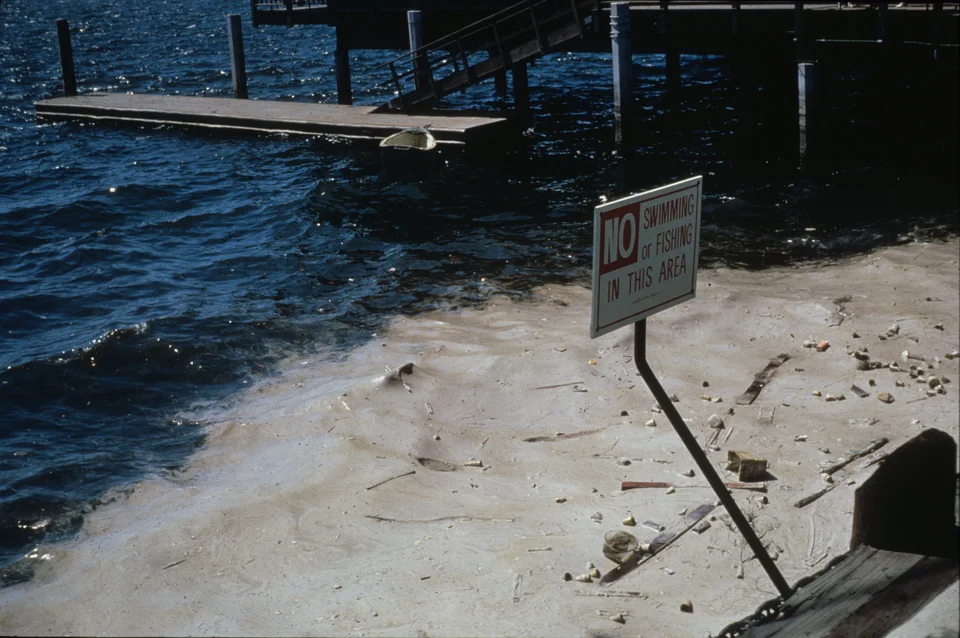
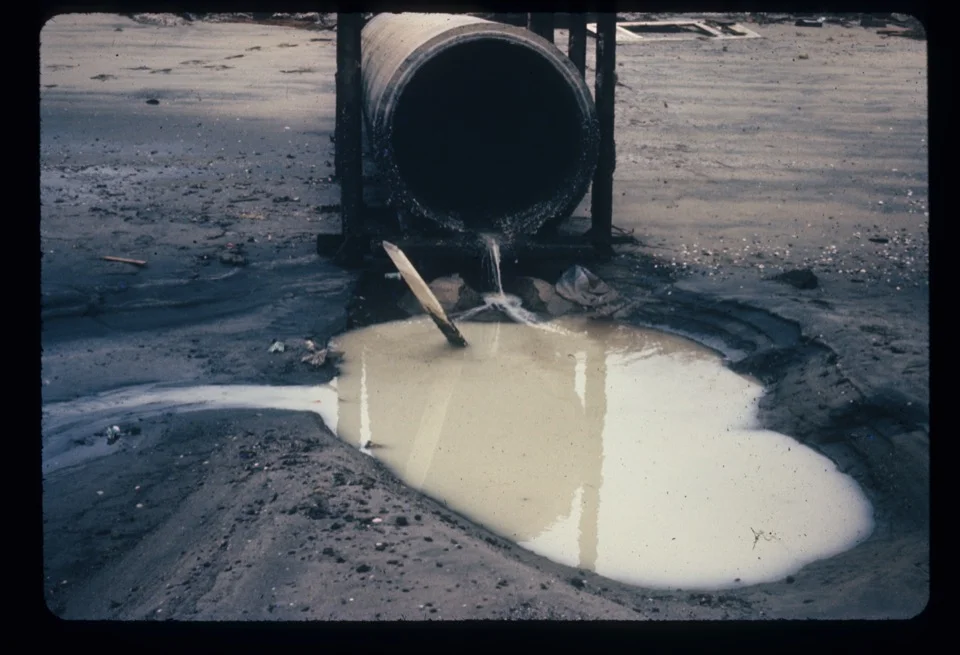
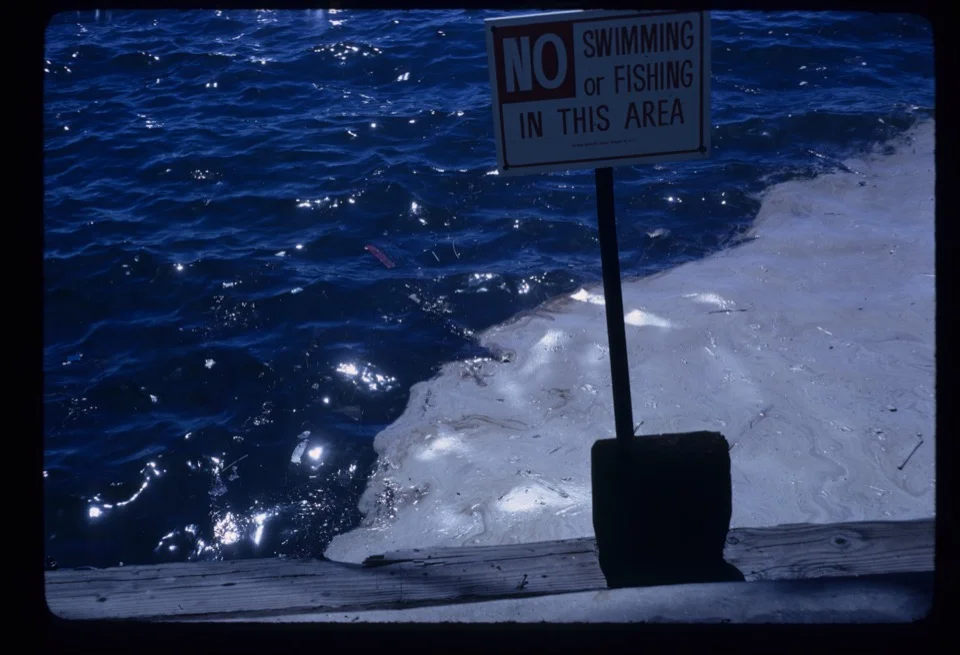
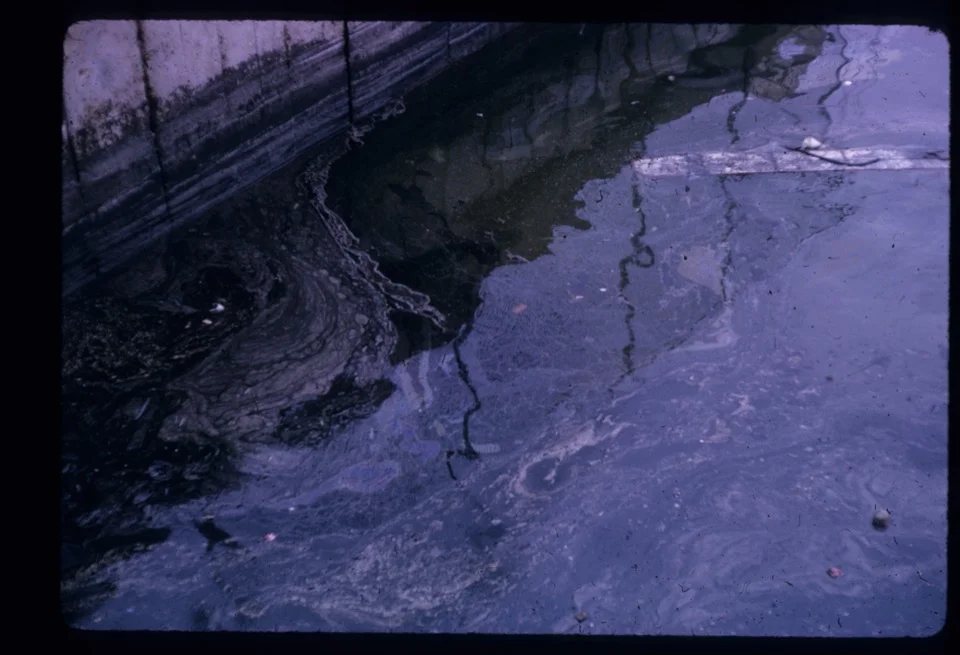
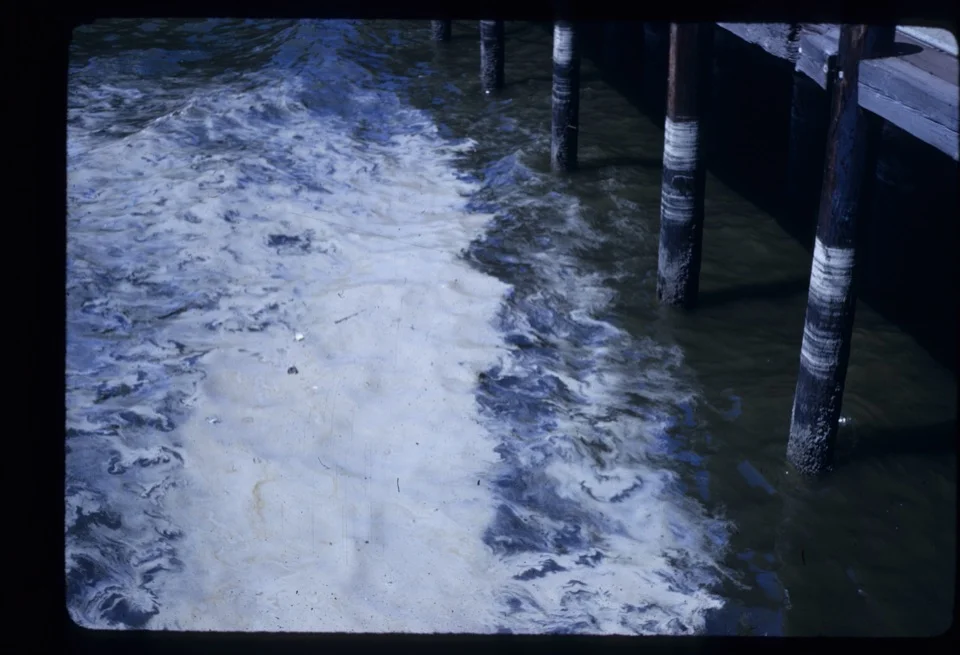
Photos of San Diego Bay in the late 1960s
When the San Diego Regional Water Quality Control Board was formed in 1949-50, the focus was on two severely polluted waterbodies: the Tijuana River, which moves untreated wastewater north across the Mexican border, into southern San Diego County and the Pacific Ocean, and the San Diego Bay, which was so polluted by partially treated wastewater that it was sometimes referred to as a "metropolitan cesspool."
The ensuing decades offer a contrasting tale of the two prominent waterbodies and illustrate the importance of regulation.
While the flows from Tijuana continue to pummel the river valley with trash, tires and contamination from untreated wastewater — a situation exacerbated by the city's fast-expanding population, poorly maintained treatment facilities and discharges from foreign-owned factories — the regional board's regulatory enforcement actions in the San Diego Bay through the years have successfully addressed a multitude of conflicts and complexities.
"Today, San Diego is a tourist destination, with a world class waterfront," said David Gibson, the regional board's executive officer. "But we could not have imagined that in the 1960s. I remember when we would go pick up my dad at the Point Loma Naval base, where he was a submariner. When you got to Midway and Rosecrans (streets), you could smell the bay. It was a heady mix of fish guts, diesel fuel, oil and sewage. There were five aircraft plants, five canneries, and Naval bases in Point Loma, Coronado and San Diego, all contributing to the pollution. And every board decision to restore and protect water quality in the bay was challenged by the Navy, Port of San Diego, cities, shipyards, boatyards and other corporations."
Real progress began when the board, capitalizing on its expanded authority under Porter-Cologne and the federal Clean Water Act, issued cleanup/abatement and cease and desist orders, and instituted its first National Pollutant Discharge Elimination System (NPDES) permit.
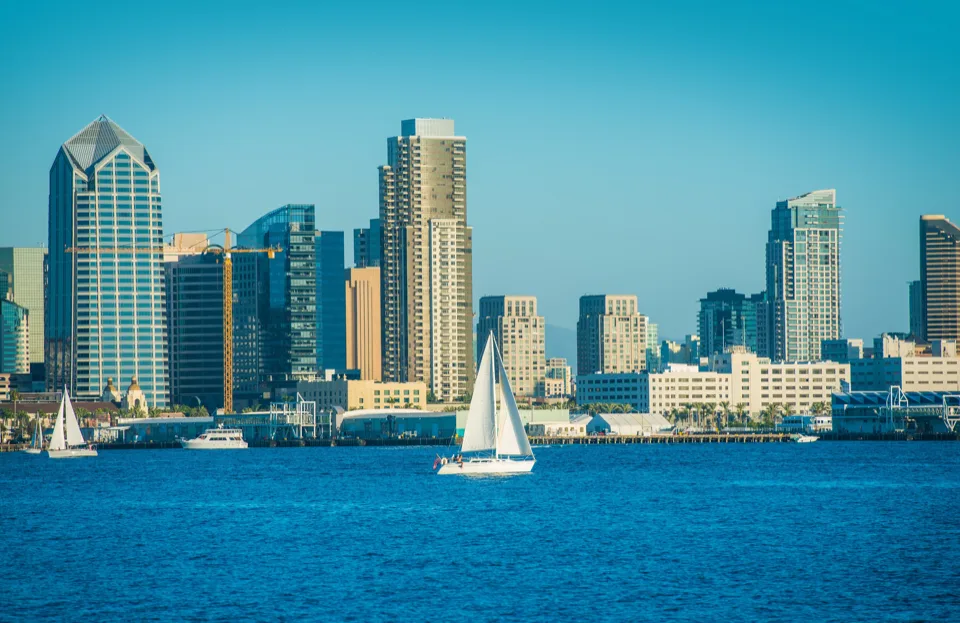
"Today, San Diego is a tourist destination with a world class waterfront. But we could not have imagined that in the 1960s."
— David Gibson, Executive Officer, San Diego Regional Water Quality Control Board
"We still have our challenges," Gibson added. "It's still unsafe to eat fish from the bay, and historically, the bay was an important food source for the city. But the bay is cleaner and healthier now than at any time during the last century, and especially the last 50-60 years. And that's only possible because Porter-Cologne and the Clean Water Act gave the boards the teeth to take action they didn't have when they were created by the Dickey Act."
San Francisco Bay: fish kill brings partners to the table
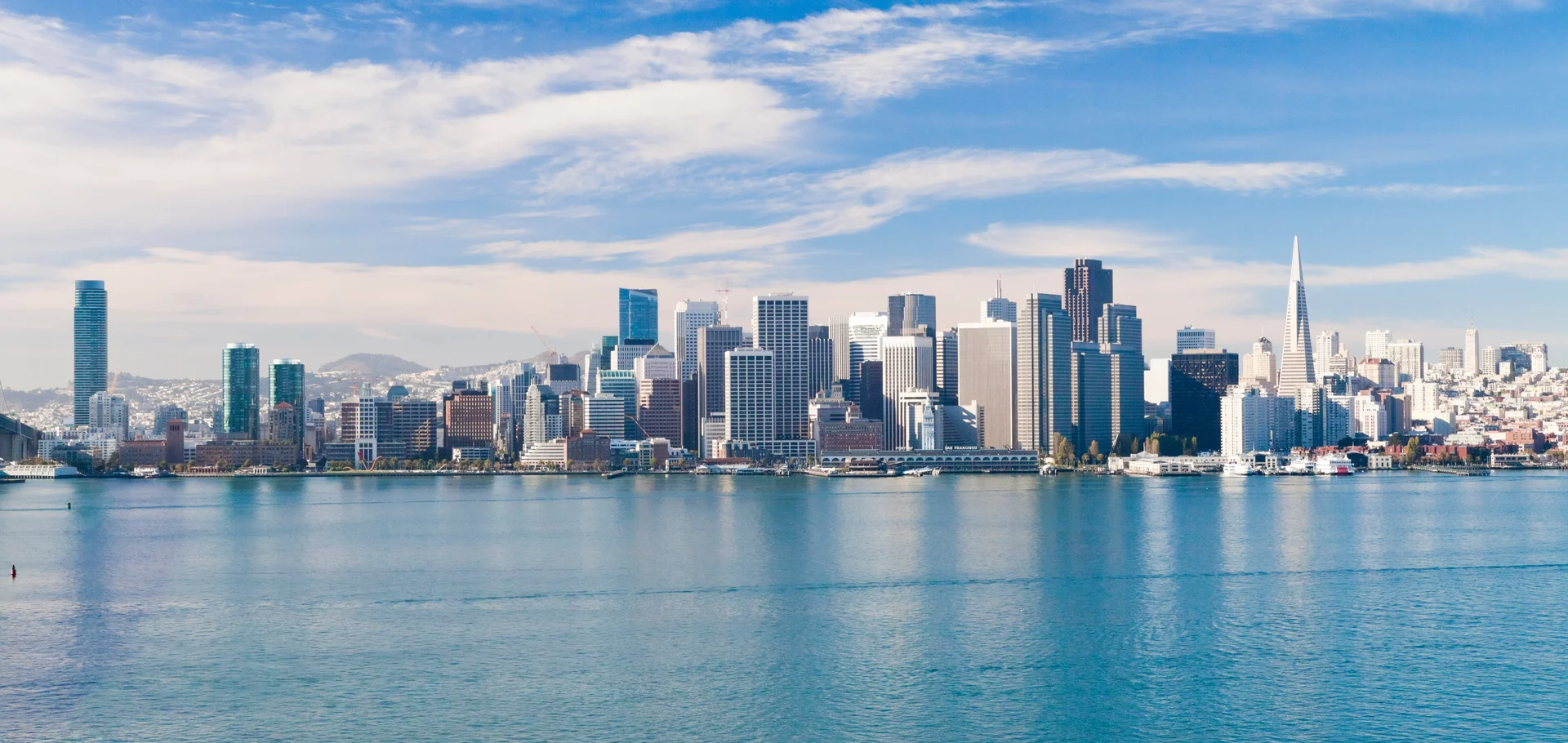
The San Francisco Bay, the largest estuary on the West Coast and one of the nation's most picturesque, iconic waterbodies, has confronted unique environmental challenges, largely starting with the Gold Rush in 1848.
Lured to Northern California by widespread tales of great adventures and fast fortunes, an estimated 300,000 prospectors from all over the world raced to the foothills and began mining for gold, oblivious to the harmful impacts.
The mining activities left remnants of mercury and sediment in Bay Delta waterways, leading to poor water quality in the region's intersecting rivers and streams, while the population boom in San Francisco prompted infill development in the bay that caused a massive shrinkage of original wetlands.
"Believe it or not, wastewater agencies discharged raw sewage right into the bay as recently as the 1960s," said Eileen White, executive officer of the San Francisco Bay Regional Water Quality Control Board. "The smell was so bad in Berkeley, even people in San Francisco complained about it. Porter-Cologne and the Clean Water Act gave us the opportunity to require permits and regulate wastewater treatment plants and allowed us to make significant progress to improve water quality."
"Believe it or not, wastewater agencies discharged raw sewage right into the bay as recently as the 1960s."
— Eileen White, Executive Officer, San Francisco Bay Regional Water Quality Control Board
Toxic algae events increased in the early 2000s
"But our work was far from over," she continued. "We began to notice in the early 2000s that we had a problem with nutrients — primarily nitrogen and phosphorous — entering waterbodies from runoff or wastewater and causing an excessive growth of algae. This led to extensive monitoring and modeling."
Staff with the San Francisco Bay Water Board also recognized that, while the region's wastewater facilities treated sewage, they were generally not equipped to remove large amounts of nutrients. In 2012, the regional board convened a meeting of diverse stakeholders to pursue solutions.
In 2014, representatives from the regional board, wastewater agencies, the San Francisco Estuary Institute and U.S. Geological Survey, along with non-governmental organizations (NGOs) and academics, collaborated on the Nutrient Management Strategy, an initiative to assess, monitor and provide the scientific foundation for managing the nutrient risks in the bay and its tributaries.
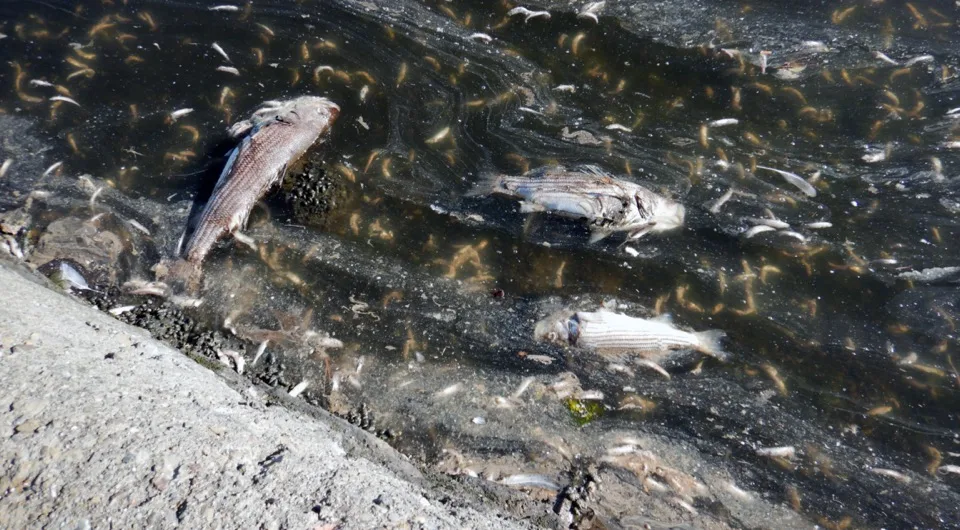
"But the big game changer happened in August 2022, with the massive fish kill that was the most horrific environmental disaster in the Bay Area in my lifetime," added White, referring to the wastewater treatment plant spill that triggered an unprecedented red tide, known as a harmful algal bloom (HABs), and impacted local waters for weeks.
New permit requires additional wastewater treatment
With input from the various experts, the regional board in July 2024 adopted a Nutrient Watershed Permit that requires 40 wastewater treatment plants to reduce their nutrient loads by 40% regionwide (compared to 2022 loads) over the next 10 years at an estimated cost of over $10 billion.
"While we recognize the cost of complying with the nutrient permit is substantial, failing to impose these requirements would also be significant," White said. "Allowing harmful algal blooms to be fueled by excessive nutrients would lead to devastating impacts to the bay, its habitats, and its people, with incalculable losses. The investment in nutrient removal technology will benefit the entire Bay Area community."
Klamath River: dams came down and the fish came back
When four dams were built on the Klamath River during the previous century, three in the northernmost region of California (Copco 1, Copco 2, Iron Gate Dam) and one in southern Oregon (J.C. Boyle Dam), the intent was to generate hydroelectric power and provide cheap electricity to spur development in the region.
But along with facilitating growth and commercial opportunity, the Klamath Hydroelectric Project altered the river's natural flow and prevented threatened and endangered salmon and steelhead from reaching their spawning grounds.
The dams' physical presence also trapped nutrient-laden water in reservoirs, which led to increasingly frequent eruptions of harmful algal blooms that float atop the water, resembling colorful throw rugs that can pose health risks to young children, pets and other wildlife.
Additionally, these conditions deprived Native Americans of ancestral lands and livelihood and resulted in an ecological disaster in 2002, when low flows — coupled with algal blooms — killed more than 34,000 mostly adult salmon.
The North Coast Regional Water Quality Control Board, which protects water quality in the northernmost part of the state, took major steps to address the Klamath River's impairment in 2010.
"There was a lot of concern at the time about the lack of a TMDL (Total Daily Maximum Load), a regulation that limits the pollution levels and protects the river's water quality," said Matt St. John, the North Coast Water Board's program manager for the dam removal and restoration project. "We worked hard, coordinated with Oregon to establish a TMDL, and developed the Klamath River Action Plan. In the plan, we proposed two pathways for PacifiCorp, owners and operators of the dams and hydroelectric facilities, to satisfy the water quality requirements."
Owners of dams and hydroelectric facilities considered two options
One set of regulations would apply if the dams remained and another if they were demolished — often referred to as the "dams-in, dams-out" options.
"Proposing two scenarios really tipped the scale," added St. John.
Amid a backdrop of intense pressure from a coalition of tribes and environmental groups, who for decades had campaigned to remove the dams and restore the river to its free-flowing condition, PacifiCorp ultimately decided the cost of upgrading the aging infrastructure to satisfy water quality requirements would be too expensive.
The company instead surrendered its Federal Energy Regulatory Commission (FERC) license and transferred ownership to the Klamath River Renewal Corporation, a non-profit formed to undertake the largest dam removal and restoration project in U.S. history—which was completed in October 2024—at an estimated cost of $500 million.
The regional board also played a critical regulatory role during the removal process, requiring the corporation to obtain both Clean Water Act Section 401 certification and a general construction permit to ensure that the roads used to remove the structures were properly designed and maintained.
As the reservoir drawdowns were being conducted, massive amounts of concrete, rock and earth were extracted from the river channel, churning up sediment that turned the water into a brown, muddy mess for weeks. Though the turbidity initially alarmed some area residents, the increased river flows have flushed the sediment and significantly improved water clarity, reducing the presence of heavy metals, phosphorous and nitrogen and eliminating the algal blooms that plagued the region for years.
Salmon return in surprising numbers
Additionally, without the dams impeding migration, coho, Chinook salmon and steelhead repopulated approximately 400 stream miles of their historic habitat in numbers that far exceed initial projections. In 2025, an estimated 51,400 fall run Chinook salmon returned to the Klamath Basin — roughly 180% of the forecast of 28,600. Another 13,008 were sighted in areas upstream of the former Iron Gate Dam.
"Watching the changes since the dams were removed has been amazing," said Valerie Quinto, the regional board executive officer. "We knew the water quality would improve and were confident the fish would find their way back, but we never imagined it would happen this quickly and in the numbers that we are seeing. It is especially rewarding considering the decades of work and advocacy by tribes, environmental organizations and community members who helped make this possible. And it really speaks to the fact that we truly are stewards of our environment and need to remember that."
"We knew the water quality would improve and were confident the fish would find their way back, but we never imagined it would happen this quickly and in the numbers that we are seeing."
— Valerie Quinto, Executive Officer, North Coast Regional Water Quality Control Board