
We have all heard the warnings and seen after-the-fact images of the earth shifting — literally sinking beneath one’s feet — because thirsty water users in the Central Valley have pumped too much groundwater for too many years.
But as California continues to expand the state’s water supply, with drought always around the corner, one community in Stanislaus County is celebrating the completion of a $16 million project that captures and stores stormwater to protect against flooding and refill the critically over-drafted Delta-Mendota Subbasin.
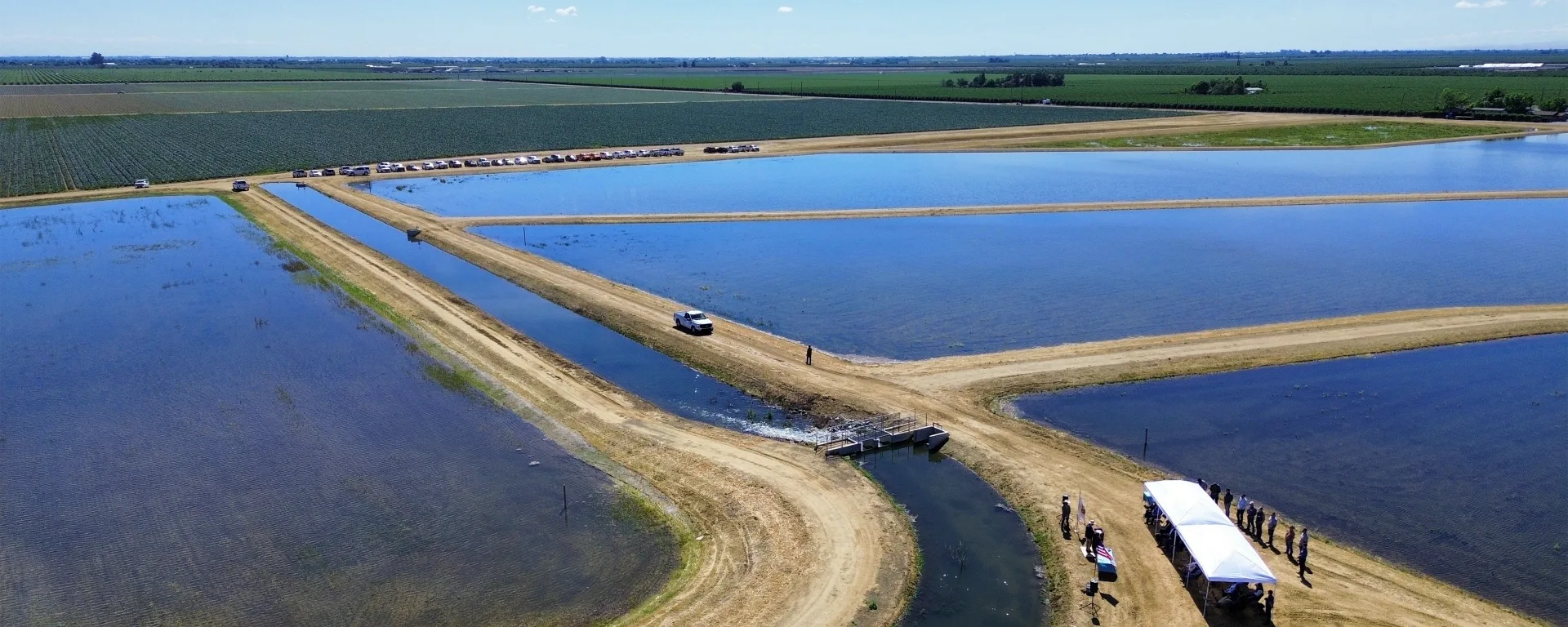
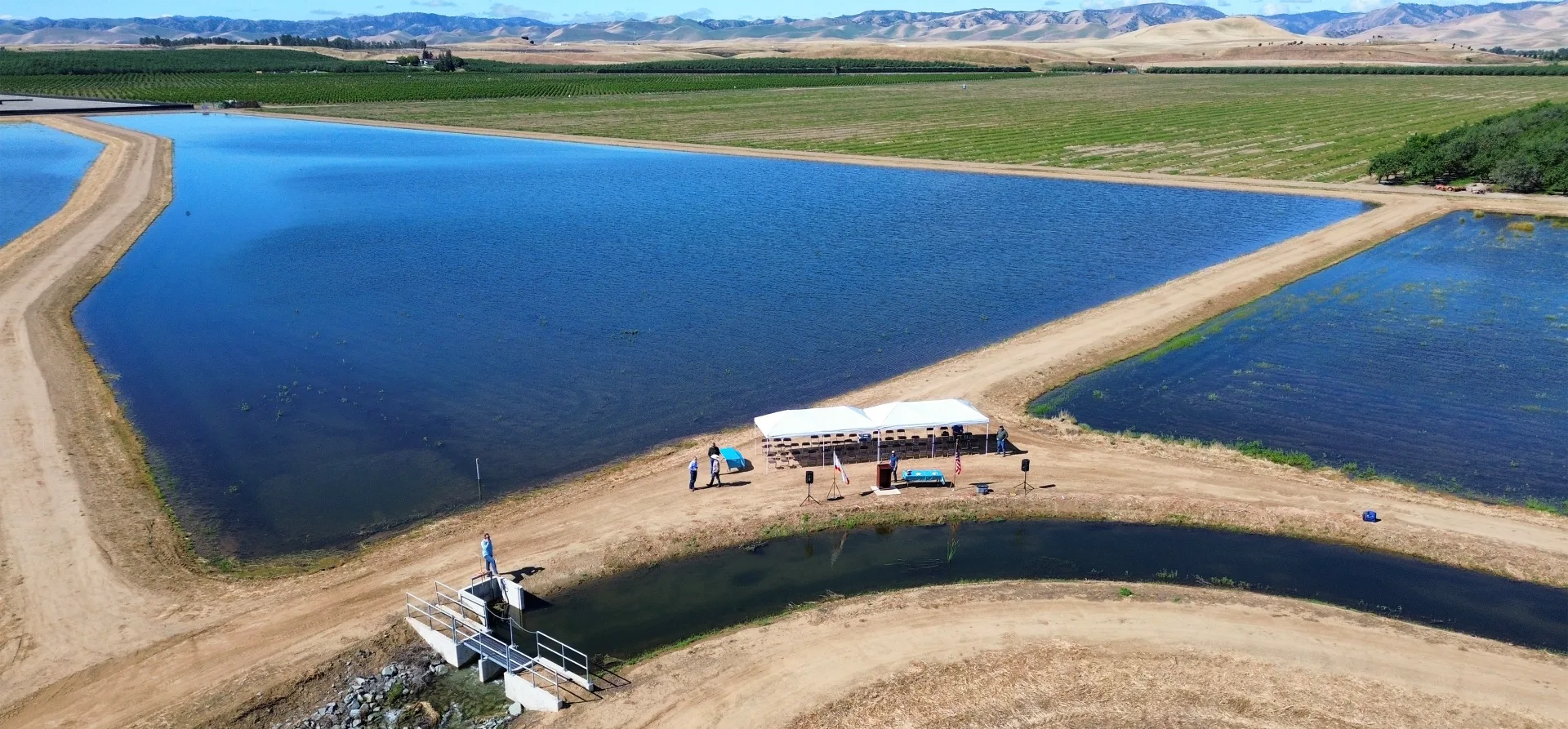
Located 15 miles south of the city of Patterson, hugging the east side of I-5, with rows of broccoli and assorted crops visible in the distance, the Orestimba Creek Recharge and Recovery Project is an example of how innovation and a decades-long commitment — coupled with a $5.6 million grant and five-year temporary water right permit from the State Water Resources Control Board — can benefit multiple parties and interests.
Storing stormwater
The project spans 80 acres and captures and directs excess surface water and storm flows into seven ponds along Orestimba Creek. The water then moves into the subbasin — boosting the water supply for over 200,000 acres of farmland and banking an estimated 15,000 acre-feet of available aquifer storage capacity. Its four wells are projected to recover 8,000 acre-feet per year in dry and critically dry years, reducing the water districts’ dependence on imported surface water. Ten percent of the recharged water is left for growers, area residents and the nearby rural community of Newman.
Operated by the Central California Irrigation District (CCID) and Del Puerto Water District (DPWD), the project also contributes to a successful basin-wide effort to improve its sustainability plans and move toward compliance with the landmark Groundwater Sustainability Management Act (SGMA). Combined with other regional efforts, Orestimba helped convince the State Water Board to remove the subbasin from state intervention and avoid possible probation.
“This is a very large geographic area and a very diverse subbasin, with fishermen, hunters, farmers,” said John Coburn, the senior engineering geologist who oversaw the project for the state board. “When we first started, there were 23 local agencies all trying to do different things, so coordinating was difficult. But everyone understood the big picture — managing the basin — and the need to come together to pull off a project like this.”
“When we first started, there were 23 local agencies all trying to do different things…but everyone understood the big picture — managing the basin — and the need to come together to pull off a project like this.”
— John Coburn, State Water Board senior engineering geologist
9,000 acre-feet already moved underground
Already this winter, the project has moved more than 9,000 acre-feet of water underground, leading to groundwater levels that are higher than at any time prior to SGMA’s enactment in 2014.
“When we started this, back in 2010, we were really looking at the decline of the reliability of the water supply in California,” explained Jarrett Martin, general manager of CCID. “We wanted to be protective of the ecosystem, and water rights, and also do something that makes sense from a flood protection perspective. This project is a step in the right direction. It diverts some of the peak flows, puts them in aquifers for recharge, saving them for dry days, and takes pressure off both flood control systems and strained groundwater resources.”
Grants from State Water Board, other agencies were key
The major challenge, not surprisingly, was securing funding. Besides the board’s grant, other federal, state and local agencies contributed $4 million, leaving local farmers to pay the balance.
“If we were funding the entire project, it would have been a really tough sell,” said Adam Scheuber, deputy general manager of DPWD. “Everyone is already strapped. Then you ask the farmers to spend x amount of money to put water into the ground? No thanks! But when we got funding through the state and the different grant sources, that really changed the bottom line for us. We were able to complete a project where the farmers can see the benefit.”
“When we got funding through the state and the different grant sources, that really changed the bottom line for us. We were able to complete a project where the farmers can see the benefit.”
— Adam Scheuber, deputy general manager, Del Puerto Water District
Another question was where to locate the ponds. As opposed to the west side of the valley, which is generally characterized by finer-grained soils, the soil at the selected site includes coarse alluvial deposits and gravel, allowing the surface water to seep more easily into the ground.
Construction stalled during pandemic
“The other issue we had was the Covid supply chain, particularly for electrical parts like breakers and switchboards,” recalled Ben Fenters, CCID’s assistant general manager. “We had to wait 24 months to get some of the parts that we needed. That, coupled with inflation, the fact the price of pipeline and labor doubled…those things were unexpected.”
Similar to Martin, Fenters, and many others involved with the project who were born and raised in the area, almond farmer Ray Henriquez recalls plenty of trying days and worrisome nights.
“But I think most of the farmers are supportive,” he said, thoughtfully. “They understand this is a process, helping us be sustainable, making farming here in the valley possible. We pay so much for water that we want it to be efficient. We don’t want to waste it for sure. And, if we can improve the water table, that’s what everyone is looking to see.”
The final word comes from Chris White, executive director of the San Joaquin River Exchange Commission, who is often referred to as the local historian: “For decades in this area we focused on moving water through our canals, reservoirs, major infrastructure. Now we are managing water in place. That’s what this really represents. It’s building long-term stability. So, when you look at this project, don’t just look at infrastructure. This didn’t happen by accident. We are adapting to the future. This is a place where we come together and get it done.”
More information about the Delta-Mendota Subbasin, the board’s permitting for groundwater recharge and financial assistance programs can be found on the board’s website.