
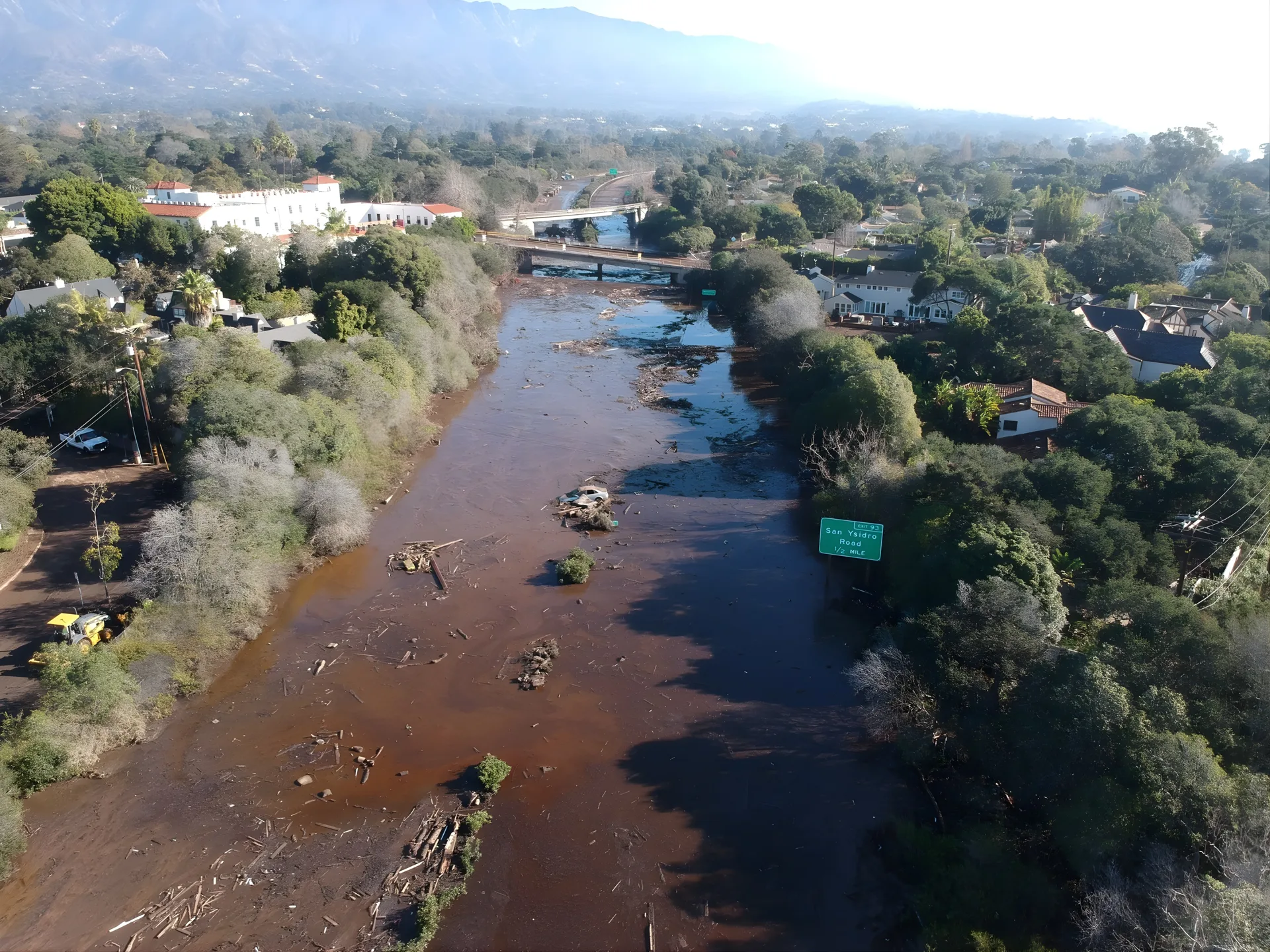
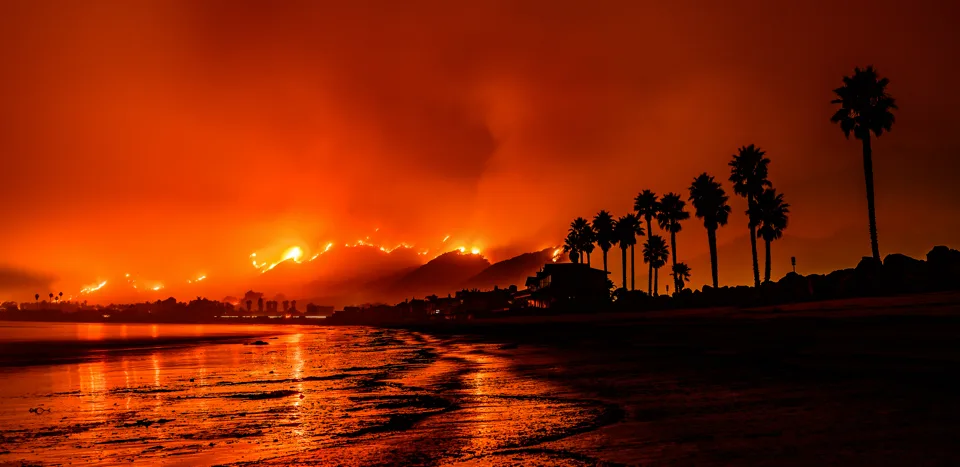
When major storms arrive in areas recently burned by wildfire, scientists and engineers at the Water Boards pay particularly close attention—not because problems are guaranteed, but because fire fundamentally changes how landscapes respond to rain.
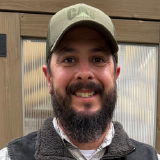
That's something Griffin Perea, a senior engineering geologist with the Central Valley Regional Water Quality Control Board, has seen repeatedly in Northern California watersheds.
"Once a big fire happens, the impacts to water don't end when the flames are out," Perea said. "In many cases, the first few winters after the fire are when we see the most severe erosion and sediment movement."
"Once a big fire happens, the impacts to water don't end when the flames are out."
— Griffin Perea, senior engineering geologist, Central Valley Regional Water Quality Control Board
Why burned landscapes may have higher erosion
Wildfires remove vegetation that once protected soil and slowed runoff. Root systems that stabilized hillsides can be damaged or destroyed, and soils can be altered, and become less able to absorb water.
The result is a landscape that sheds water quickly, carrying soils eroded from hillslopes and depositing them in stream systems.
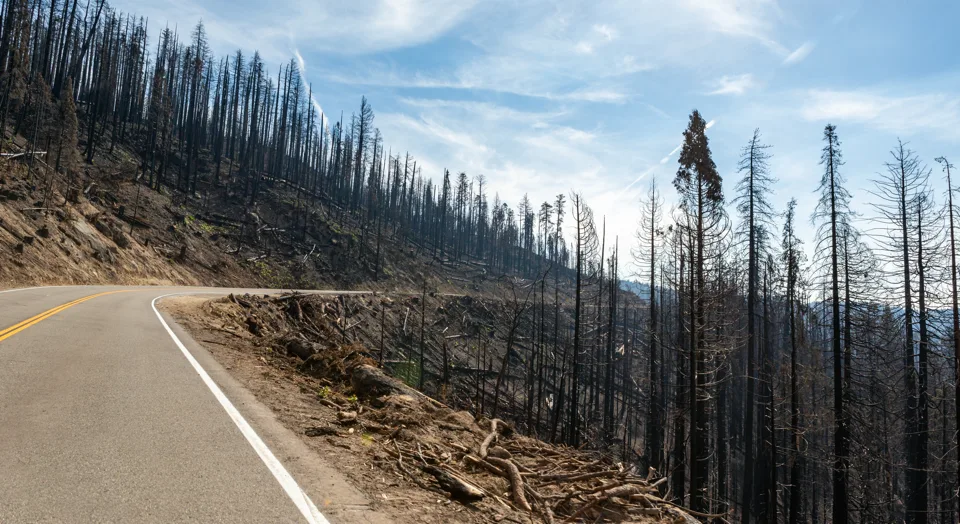
According to Perea, the first two to three winters after a major fire are especially critical—but impacts can last much longer.
"We've consistently seen severe erosion for several years after fires," he said. "And it's often hard to predict exactly how long those effects will persist."
The "sediment slug" that lingers
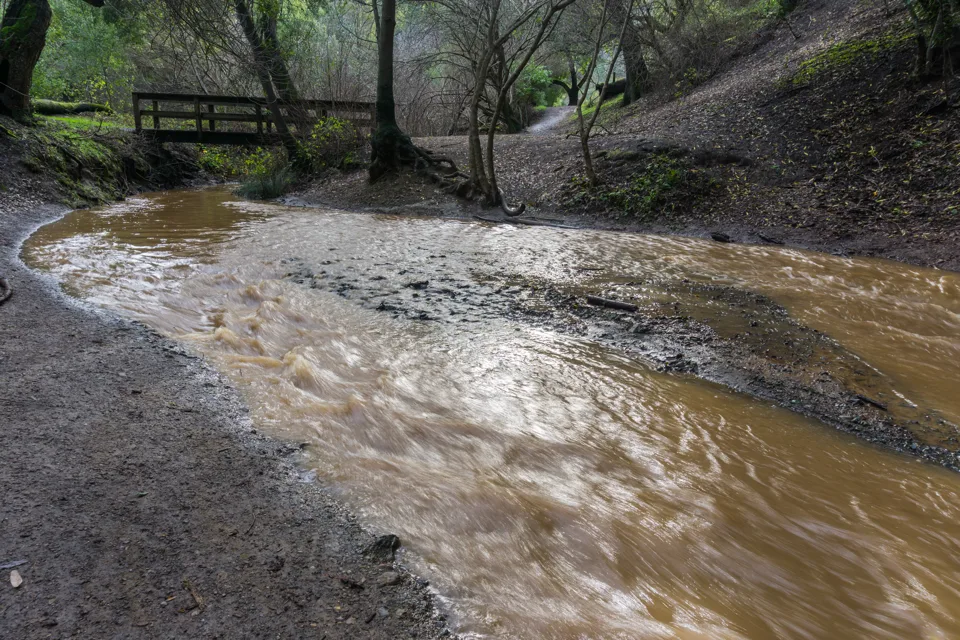
One of the less visible—but most damaging—post-fire effects is delayed sediment movement.
After major storms, sediment can be deposited and stored in stream channels rather than flushing out immediately. Over time, that material moves downstream in pulses, creating recurring sediment and turbidity (cloudiness) years after the fire.
Perea points to watersheds like Battle Creek as an example. After the 2012 Ponderosa Fire in Tehama and Shasta counties, heavy rains sent pulses of sediment through the system for five years after the fire, scouring banks and impacting salmon habitat.
"You'll see big runoff events right after the fire, and then a large amount of sediment gets deposited," he said. "That sediment can take years to work its way through the system."
The result is repeated water quality impacts long after the initial emergency has passed.
Sediment can kill fish
Sediment may not sound dramatic, but its ecological impacts can be profound.
Fine sediment can:
- Cover gravel beds, inhibiting salmon and trout's ability to spawn; if the salmon have already spawned, fine sediment can cover the eggs and suffocate them.
- Fill in deep pools that normally provide cold-water refuge and shelter from predators.
- Increase water temperatures and alter stream chemistry.
- Clog the gills of fish and suffocate them.
- Impair fish foraging and their ability to breathe.
"It's easy to think of sedimentation as just a bit of dirt in the water," Perea said. "But it can completely change stream habitat. Gravel beds get filled in, pools get shallower, and suddenly you've lost the conditions fish rely on to survive."
Those physical changes can ripple through ecosystems for years.
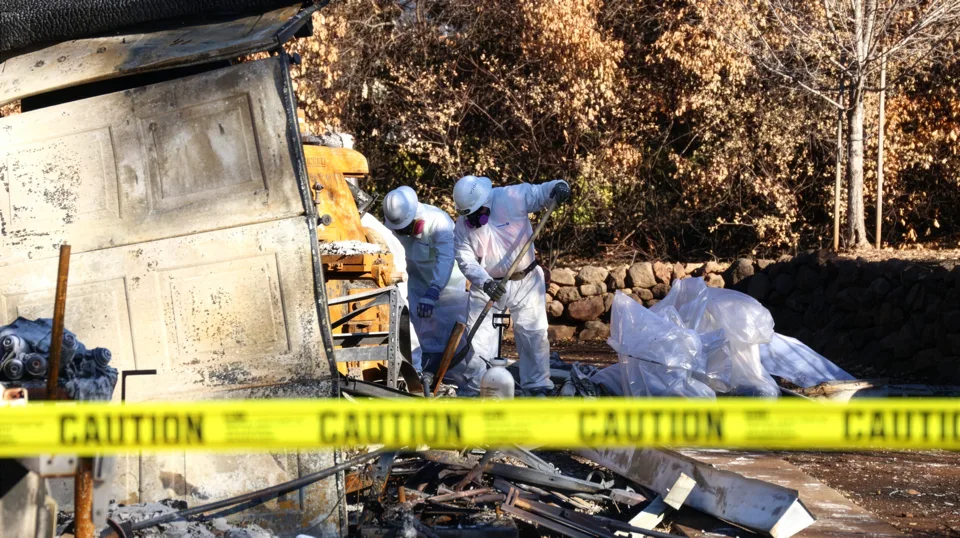
Burned infrastructure adds more danger
When fires burn through towns or developed areas, runoff can carry additional contaminants from burned structures—such as metals from electronics, vehicles, and household materials.
That's why rapid debris removal, conducted by agencies such as Cal OES, the US Army Corps of Engineers and CalRecycle, is a priority before storms arrive. Even with those efforts, sediment remains the most widespread and persistent challenge across large burn areas.
What this means for drinking water
For drinking water systems that rely on rivers and reservoirs, post-fire runoff can make treatment more difficult—especially during large storms.
"Increased turbidity can overwhelm treatment systems," Perea said. "Filters can clog, operators may need to adjust treatment processes, and everything becomes more challenging during storm events."
This doesn't mean drinking water is unsafe—but it does mean operators must be prepared to respond quickly when source water conditions change.
What can be done—and what's being tried
While post-fire erosion is difficult to manage at scale, innovative projects are showing promise.
After the Park Fire in Butte and Tehama counties, teams used process-based restoration in the Big Chico Creek Ecological Reserve—strategically placing native woody material and rocks in tributaries to slow flows and sediment delivery to the main channel.
"It's low-tech and very labor-intensive," Perea said. "But it can make a real difference by holding sediment longer up higher in the watershed instead of letting it all move downstream at once."
Projects like this require coordination, permitting, and strong partnerships—but they offer a glimpse of how wildfire recovery can be accelerated.
The Water Boards' role after a fire
Decades of fire suppression, coupled with increasing temperatures due to climate change, have dramatically increased wildfires’ size and intensity throughout California. Water Boards staff work behind the scenes to ensure recovery efforts don't unintentionally make conditions worse.
Staff consult with project proponents, review permit applications, provide technical support regarding application of best management practices, conduct in-stream monitoring, and pay close attention to activities like salvage logging and road construction—often the largest sources of human-caused sediment if poorly designed or executed.
"Roads and stream crossings are always a concern," Perea said. "In a post-fire environment, even infrastructure that worked fine before can suddenly become a major problem."
A long recovery—and a realistic view
Post-fire recovery takes time. Even when grasses return, higher runoff persists because trees and shrubs that once absorbed water are gone.
The takeaway isn't alarm—it's awareness.
Heavy rain after wildfire is something scientists watch closely because the risks are real, measurable, and long-lasting. But they are also understood, monitored, and increasingly addressed through collaboration and experience.
As Perea put it, "This work isn't always visible, but it's happening every day—storm by storm, watershed by watershed."
More information about the work of the Central Valley Water Board and State Water Board’s Emergency Management Program to protect water quality in post-wildfire environments is available on Water Boards’ websites.